 Brixel Proyect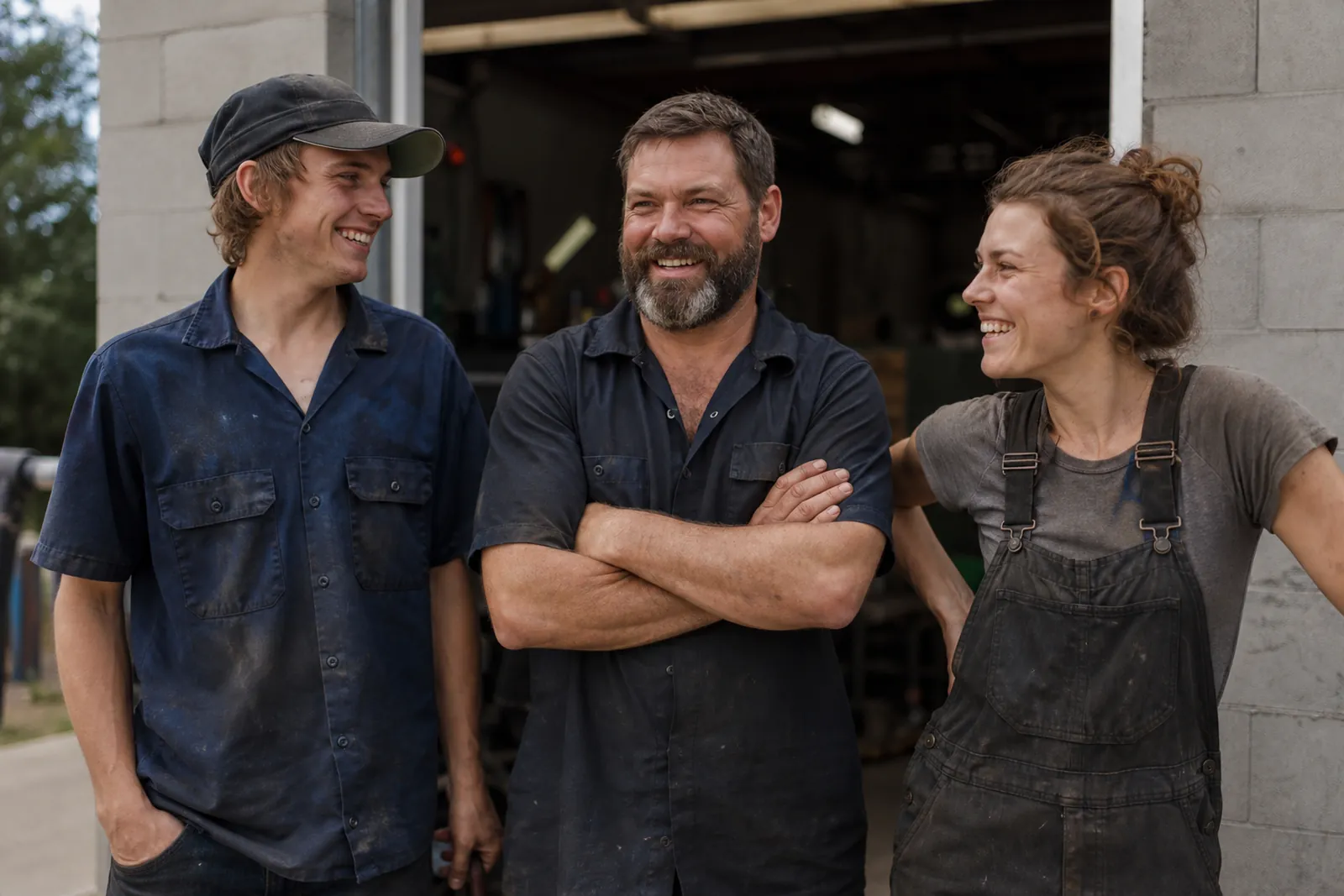
Start with the job your About page has to do
Most people do not open your About page to read a brand story for fun. They open it because they are trying to decide if they can trust you with their home, their car, their shop, or their health. They want a quick sense of who you are and what kind of people they will meet when they call.
Write for that person. Keep the page clear, calm, and specific. A good About page should answer a few plain questions fast: What kind of business is this? Who works there? How long have you been serving customers? Why should someone feel comfortable reaching out?
- Write the first line like you are greeting a new customer at the door.
- Skip long history lessons unless they help explain your service.
- Use plain words people say out loud, not office talk.
Show who shows up at the door
Customers want to know who may come to their home or business. If you are a solo owner, say that. If you have a crew, introduce the team in a simple way. You do not need full biographies. A few lines about the people on the job is enough.
This is where many local service pages miss the mark. They talk about the company as if it is a building, not people. That makes the page feel cold. Try naming roles instead: the person who answers calls, the technician who handles repairs, the stylist who cuts and colors, the staff member who greets visitors. Real people help the page feel grounded.
- Use first names when it fits your business.
- Mention if the same people answer the phone and do the work.
- If you serve sensitive spaces, say how your crew treats homes or clinics with care.
Tell the part of your story that earns trust
You do not need a dramatic origin story. You need a believable one. If you started the business after years of working for someone else, say that. If you learned the trade from family, say that. If you built the business because you wanted better service for local customers, say that too.
The best stories connect to the work. Maybe you noticed how hard it was to get a straight answer from other contractors. Maybe you saw that people in your area needed a locksmith who would actually show up ready to help. Maybe you wanted a salon where clients felt heard. The point is not to sound inspiring. The point is to sound real.
- Keep the story short and tied to customer needs.
- Do not fake a personal backstory to sound more interesting.
- If your business has changed over time, explain what stayed the same.
Say how long you have been at it without padding the page
People often look for signs that you have done this work before. If you have been serving the area for a long time, say so in a natural way. If your business is newer, do not hide that. Talk about the experience behind it, the training you bring, or the work you did before launching the company.
There is a difference between sounding seasoned and sounding inflated. A line like, 'We have spent years working with local homes and businesses across Miami,' feels grounded. A page full of vague claims does not. Keep the focus on steady experience, the kinds of jobs you handle, and the way you work with customers.
- Mention the kinds of jobs you handle most often.
- If you know a neighborhood well, say that plainly.
- Avoid claims that sound bigger than your actual operation.
Explain why you do the work the way you do
This part helps people feel your standards. Why do you answer the phone the way you do? Why do you show up in uniform? Why do you explain the job before starting? These details tell people how you treat them, which is often what they care about most.
Keep the focus on habits, not slogans. For example: maybe you take time to walk a customer through the next steps. Maybe you clean up after a repair. Maybe you give honest advice when a fix is enough and a replacement is not needed. Those are the kinds of things people remember.
- Write about how you work, not just what you say you value.
- Choose habits customers can picture.
- If you serve families, seniors, or busy professionals, mention how you make the process easier for them.
Use a real photo that makes the page feel human
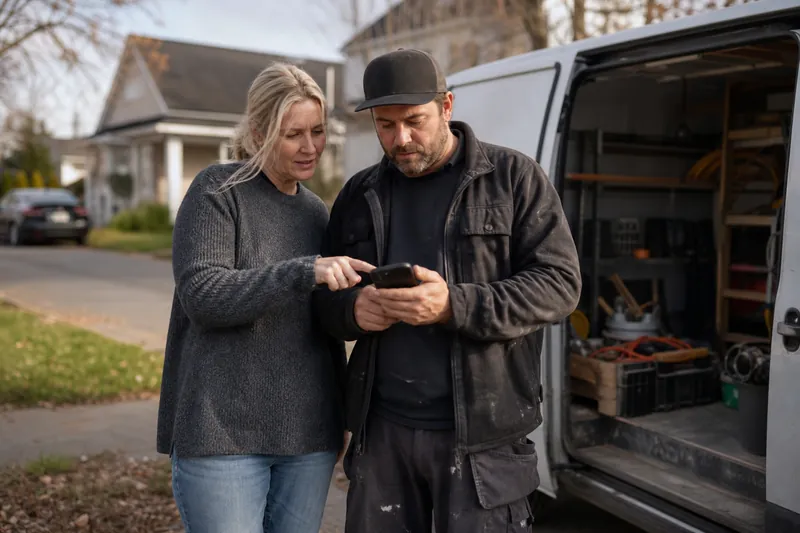
A real photo does more for trust than a stock image ever will. Show the owner, the team, or the person who will likely answer the phone. If your work is done in a truck, shop, salon, clinic, or office, include that setting too. People want to see that you are a real local business, not a generic page.
Keep the photo honest. Use natural light if you can. Let people look at the camera or work naturally. Avoid overly polished poses that feel staged. If your business has a crew, a simple group photo can work well. If you are solo, a candid shot in your workspace can say a lot without much text.
- Use a photo taken in the place where you actually work.
- Choose a current picture, not one from years ago.
- If you can, show tools, uniforms, or the service space without making it feel cluttered.
Make the page easy to scan and easy to believe
Most visitors will not read every line. They scan. That means your About page should have short paragraphs, clear headings, and a few lines that stand out. Put the most useful details near the top, then support them with a short story and a real photo. Do not bury the basics in a long block of text.
Read the page out loud before you publish it. If a sentence sounds stiff, trim it. If a paragraph repeats the same point, cut it. If you would not say it to a customer face to face, leave it out. A plain page often works better than a fancy one because it feels honest.
- Keep one main idea per paragraph.
- Cut filler words and extra praise about your own business.
- Make sure the page still makes sense if someone reads only the first half.
Questions owners ask
How long should an About page be for a local service business?
Long enough to answer the questions people actually have, and no longer. For many businesses, that means a few short sections with a clear story, team details, and a real photo. If the page starts repeating itself, it is probably too long.
Should I write the About page in first person or plural?
If you are a one-person business, first person can feel natural. If you have a team, use 'we' so visitors know they are hiring a business, not a solo voice. The main goal is to sound honest and consistent.
What should I leave off an About page?
Leave off long fluff, vague claims, and anything that does not help a customer decide if they want to call. Do not use a stock photo that could belong to any business. If a detail does not help build trust or explain how you work, it can probably go.