 Brixel Proyect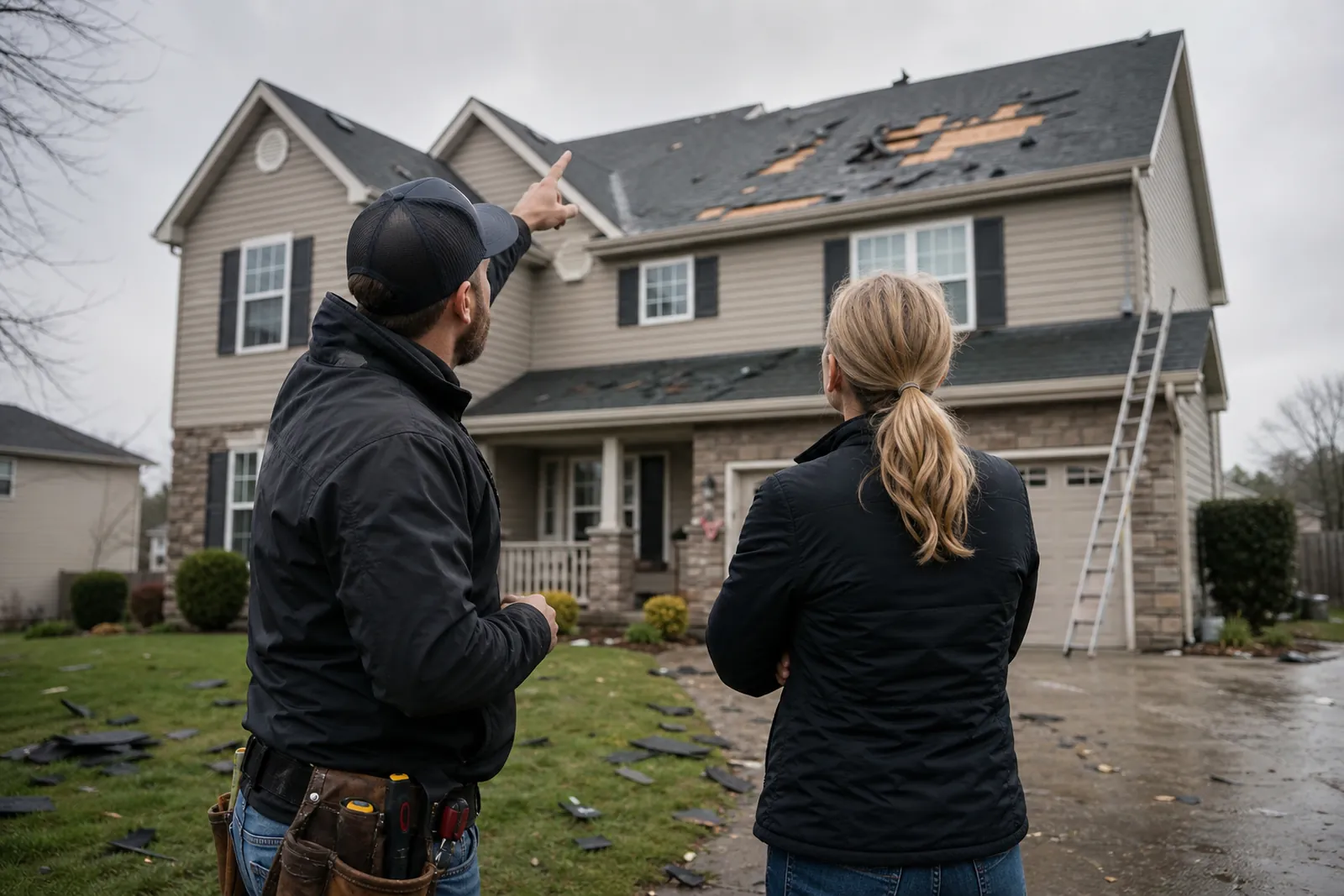
Where the calls come from
Most roofers do not have a marketing problem. They have a moment problem: the customer needs help at a specific hour, in a specific town, and calls whoever shows up first for that exact search. After a storm, every homeowner on the same street searches at once, and the roofer whose page shows that exact town gets the call.
That means leads are not something you buy in a batch. They are the sum of many small searches, each one won or lost on whether a page exists for that job in that place. Everything below is about being present for those moments without paying per lead.
Stop buying the same lead as four competitors
Lead marketplaces sell one homeowner's request to several companies at once. You pay whether or not you get the job, and the customer picks whoever answers first or quotes lowest. It can fill a slow week, but it trains you to compete on speed and price against people who bought the same name.
The alternative is slower to start and cheaper to keep: a website that answers the searches people in your towns actually type, a Google Business Profile that is complete and reviewed, and a phone that gets answered. Those three do not send you an invoice for every call.
- Keep any lead service you already use until your own calls replace it, then drop it town by town.
- Track which calls came from your own pages and which from bought leads. The difference decides what you keep paying for.
A page for every town you drive to
The single biggest gap on most roofers websites is coverage. The site has a home page, a services page and a contact page, and it competes for every search from one address. Google answers a search for a job in a town with a page about that job in that town, and if you do not have one, somebody else does.
Write one page per town you serve, with the streets and places locals recognize, the jobs you do there, and photos of work you did nearby. Then link the pages to each other and to your county page. This is the work behind the busiest roofers sites we have built, and it is what our <a href="/roofing.html">pages county by county</a> are made of.
- Start with the towns where you already get work. Real photos and real reviews from there make the pages believable.
- One page per job in each town beats one long page listing everything.
The jobs people search for, one page each
Customers do not search for your company name. They search for the job. For roofers that usually means storm and hail damage, leak repair, full replacement, and insurance claims. Each of those deserves its own page in each town, written for what the customer is looking at right now, with a phone number at the top and a form that takes a few taps on a phone.
Keep the language the customer uses, not the trade's. The page should read like the answer to the question they typed.
Season and timing
Demand arrives in waves after hail, high wind and heavy rain. The busiest week is the one right after a storm, and the homeowner searching then is standing under a leak. In the quiet months, inspections, maintenance and insurance questions keep the phone going.
Get the pages, the photos and the reviews ready before the season, not during it. Once the calls start, nobody has time to write.
Insurance work and the pages that win it
A large share of roofing work after a storm goes through an insurance claim, and the homeowner searching for help wants to know you can document the damage and deal with the adjuster. Say so plainly on the page, with photos of the kind of documentation you produce, and keep the wording honest: you help with the process, you do not promise an outcome.
- A short page explaining what happens after a storm, step by step, gets shared between neighbors.
The profile, the reviews and the phone
Your Google Business Profile is the map result, and the map is what most people tap first. Fill in every service, keep the hours and phone identical everywhere, add real photos from jobs, and ask every happy customer for a review that names the job and the town. Then answer the phone, or have someone who does, because the first company that picks up usually gets the work.
None of this is a trick. It is the same short list every busy roofer already does, written down so you can check yours against it.
- Reply to every review, good or bad, in one or two plain sentences.
- Put the phone number in the first screen of every page and in the profile, spelled the same way.
Questions owners ask
Should I still buy roofing leads while my pages are new?
If a service is paying for itself, keep it while your own calls grow. Track both sources separately, and drop the bought leads town by town as your pages take over.
How many town pages does a roofer need?
One for every town you would actually drive to for a job, times the jobs you want calls for. A roofer covering thirty towns and four jobs ends up well past a hundred pages, which is normal.
What if I have no photos from a town yet?
Use photos from the nearest town you have worked in and say where they are from. Replace them with local ones after the first job there.